California Irrigation Golden Mussel Alliance
Application.
Monitoring.
Asset protection.
CIGMA brings invasive mussel preparedness, field application, monitoring and performance verification together into a coordinated management program for irrigation and water-delivery systems.

Upcoming CIGMA event
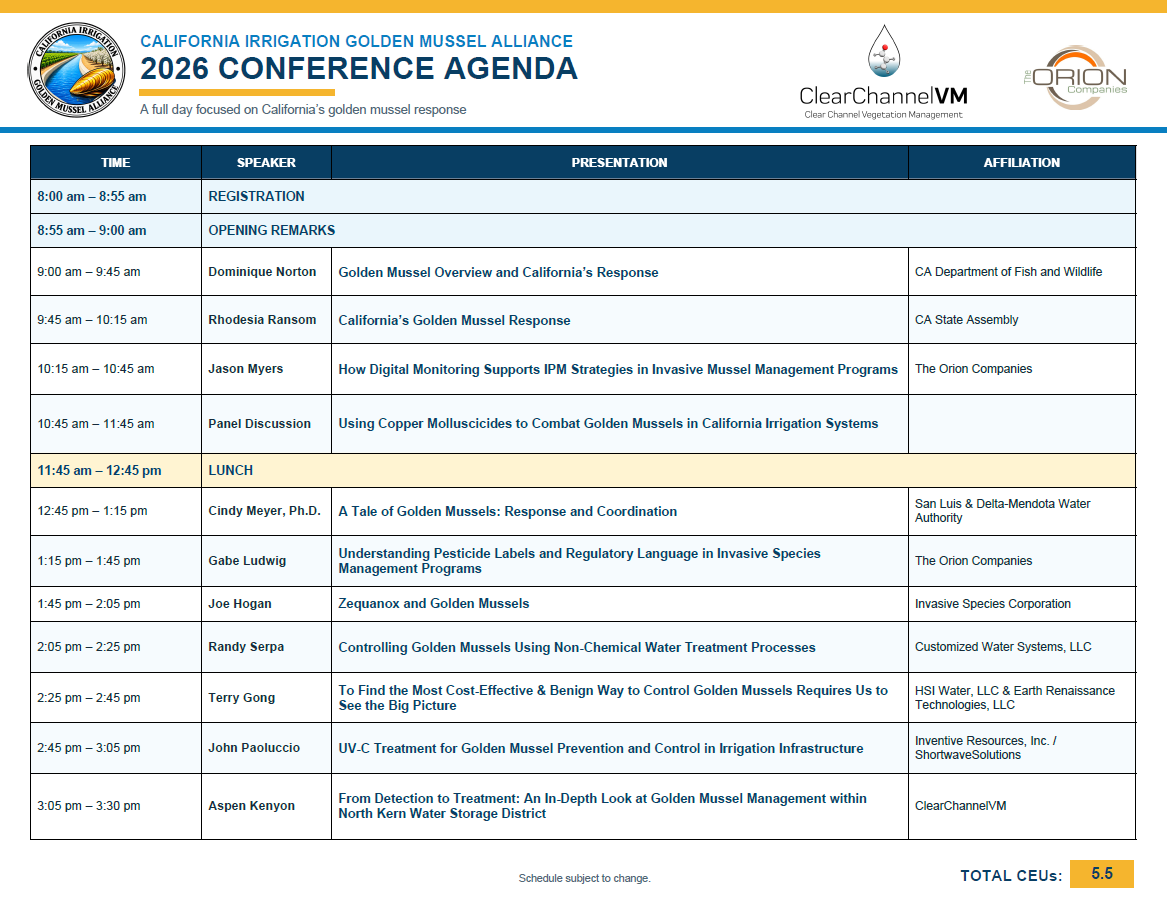
CIGMA — October 7, 2026
California Irrigation Golden Mussel Alliance 2026 ConferenceA full day focused on California’s golden mussel response, management strategy, infrastructure protection and industry coordination.
The infrastructure problem
Mussel pressure becomes an asset problem.
Invasive mussels do not have to cover an entire system to create serious operational consequences. Screens, gates, pipes, pumps and other wetted infrastructure can accumulate biofouling, trap debris, restrict flow and increase maintenance demands.
CIGMA is built around preventing that biological pressure from becoming an infrastructure failure.

Screens & intakes
Attachment and fouling can reduce open area, trap debris and increase cleaning frequency.
Pipes & conveyance
Colonization can restrict internal surfaces and change hydraulic performance.
Gates & structures
Biofouling on moving or wetted components can increase operational friction and maintenance.
Asset condition
Persistent fouling can accelerate corrosion and complicate inspection, repair and system reliability.
The CIGMA program model
Application. Monitoring. Results.
CIGMA treats mussel management as an operating program, not a single treatment event. The objective is to understand the system, apply the right response, measure what happened and use that information to protect the asset over time.
Application
Treatment strategy, chemistry, dosing and practical field implementation developed around the actual hydraulic and operating environment.
Monitoring
Routine field monitoring and system observation to understand mussel pressure, treatment conditions, lifecycle timing and response over time.
Results
Verification and documentation that demonstrate treatment performance and confirm asset protection, helping protect irrigation infrastructure and inform the next management decision.

Mussel Pressure
Generic example only — actual response is site-specific and must be measured in the field.

Field observations and sampling reveal whether mussel pressure is present and how conditions are changing.
Biofouling Load
Verification connects management activity to the condition of screens, gates and other wetted assets.

Direct inspection connects treatment activity to fouling on screens, gates and other wetted infrastructure.
Maintenance Demand
The management goal is functional, inspectable infrastructure and fewer avoidable interventions.

The goal is reliable water delivery, functional infrastructure and fewer avoidable maintenance interventions.

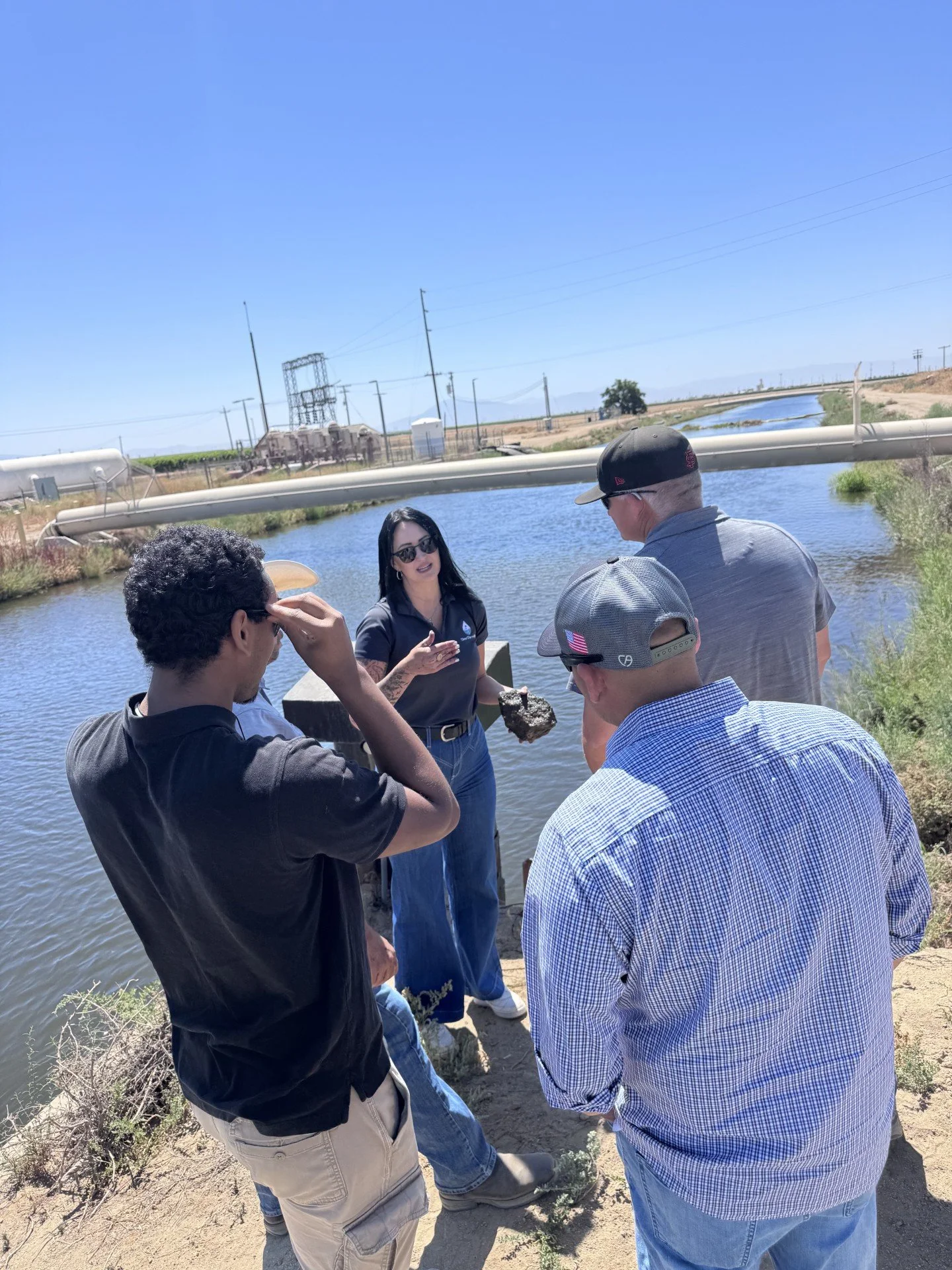
Field application
The response has to work in the actual system.
Mussel treatment strategy is developed around the infrastructure that needs protection and the hydraulic conditions that control treatment exposure. Recommendations have to survive contact with the field.
Injection and application points are selected around flow, target reaches, infrastructure and the locations where exposure can realistically be achieved.
Program design considers the concentration and exposure time required to affect the target life stage while respecting system conditions and operational constraints.
Mixing, delivery, timing, access and system operation are considered before treatment—not after the recommendation has already been made.
From targeted field applications to bulk delivery, ClearChannelVM can stage, transport and deliver treatment at the scale required by the system and operating plan.
Know what is happening
Monitoring changes the quality of the decision.
Preparedness starts with knowing whether pressure exists, where it is appearing and whether conditions favor continued reproduction or attachment. Repeatable monitoring gives managers something more useful than a visual guess.

Early awareness
Build the monitoring plan before fouling becomes obvious so the system is not reacting only after infrastructure is already affected.
Lifecycle timing
Monitoring can be aligned with periods of elevated reproductive activity and changing water conditions to improve response timing.
System observations
Track vulnerable structures, treatment reaches and known collection points using consistent field documentation.
Treatment verification
Compare observations before and after treatment so field work can be connected to measurable system outcomes.
Results = asset protection
The result is not a treatment. The result is protected infrastructure.
For CIGMA, “results” means the system remains functional, inspectable and maintainable. Treatment documentation matters because it demonstrates whether the program is protecting the physical asset—not simply whether product was applied.

Protect the Asset
Golden mussels can accumulate directly on screens and wetted infrastructure. The objective is to prevent this pressure from compromising function, inspection and reliable water delivery.
Measured Performance
Illustrative trend only. Real CIGMA results are built from repeatable monitoring and site-specific documentation.

Verified in the Field
Field measurements and observations connect treatment activity to the actual condition and performance of the system.

Industry education & coordination
Preparedness improves when information moves faster than the infestation.
CIGMA creates a place for irrigation professionals to share field observations, discuss monitoring and response strategies, and build practical preparedness around the realities of California water-delivery systems.
The program is supported by ClearChannelVM field experience and a focus on actionable, site-specific response planning.
Start before the asset is compromised
Bring us the system.We’ll build the mussel plan together.
Talk with a ClearChannelVM technical specialist about your irrigation or water-delivery system, current monitoring, vulnerable infrastructure and the level of mussel pressure you are dealing with.
Get CIGMA Technical Support